
In today’s digital-first world, our professional and personal lives revolve around files. Whether you’re drafting a report for work, creating a design project, editing photographs, or simply writing down personal notes, every piece of information you create is stored digitally. With so much of our productivity depending on files, efficiency in managing them becomes crucial. Navigating menus repeatedly to carry out common actions wastes valuable seconds, which can quickly add up when you’re handling dozens of files every day. This is where keyboard shortcuts come into play.
Among the many shortcuts available, one of the most practical yet often underestimated is the save as hotkey. Unlike the regular save function, which updates the current version of a file, “Save As” empowers you to create duplicates, rename them instantly, and choose entirely new storage locations. This not only provides a safety net against accidental overwrites but also makes your workflow smoother. When integrated into daily routines, this single shortcut can save hours over time, all while reducing stress, improving file organization, and ensuring that your creative or professional projects remain protected.
Understanding File Management Efficiency
Managing files efficiently is no longer just a convenience, it’s a necessity. Every project involves multiple stages, and each stage often requires a version of the file that can be referenced or modified without losing past progress. Without shortcuts, this process becomes cumbersome, forcing users to click through layers of menus that interrupt focus. Efficiency is about staying immersed in the task at hand, and shortcuts like “Save As” are designed to minimize disruption.
The Purpose of “Save As”
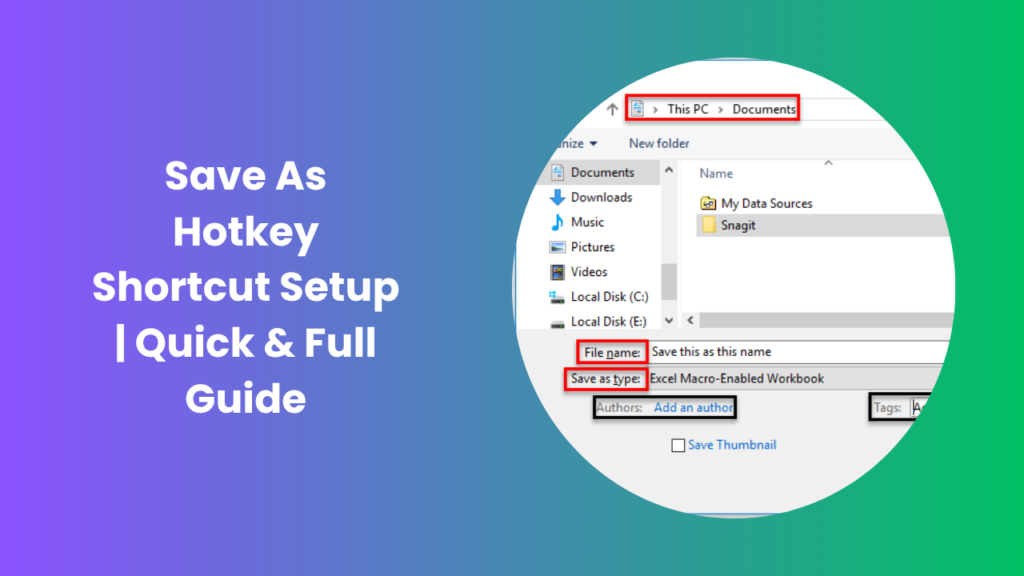
The difference between “Save” and “Save As” might appear subtle at first glance, but it’s critical. “Save” is like pressing pause on your current work, locking in the latest changes on the same file. “Save As,” however, allows you to branch off from that point, creating a new version that can be named differently or saved in another location. This is invaluable for anyone who needs to experiment, compare different variations, or keep records of progress at different points.
How Keyboard Shortcuts Improve Workflow
Relying on a mouse for repetitive tasks is inefficient. Moving your hand from the keyboard to the mouse and back again might take only a moment, but multiplied across hundreds of actions, it steals minutes and eventually hours from your workflow. Keyboard shortcuts eliminate this waste by keeping you focused. Once learned, they become second nature, enabling you to work more fluidly without breaking concentration.
The Role of Save As Hotkey in Daily Tasks
The save as hotkey isn’t just about saving time, it’s about protecting your work while giving you the freedom to explore creative directions. Think about how many times you’ve needed to prepare different versions of a presentation, tailor a contract for different clients, or produce drafts of a piece of writing. Having an immediate command that generates a fresh version keeps your original file secure and reduces the risk of overwriting critical information.
Compatibility Across Applications
The beauty of this shortcut is that it works across a vast range of software. From word processors and spreadsheets to graphic design platforms and coding environments, the shortcut provides consistency. Although the exact key combination varies depending on whether you use Windows, macOS, or specific applications, the underlying principle remains the same. Learning the pattern in your preferred environment makes it transferable across many tools.
Avoiding Common Mistakes
Confusing “Save” with “Save As” is one of the most common causes of file overwriting. It often happens when users are multitasking or rushing. Shortcuts reduce this risk because they create a physical habit you press a specific combination of keys when you want a new file version. Over time, this becomes instinctive, eliminating hesitation and preventing costly mistakes.
How Different Fields Benefit from Save As Shortcuts
Writers and Editors
For writers, each draft tells a story of progress. Draft one might be messy and unstructured, while draft three could be polished and refined. Having the ability to quickly generate versions ensures that no stage of creativity is lost. Editors also benefit because they can track changes across versions, compare edits, and revert to earlier drafts if needed.
Designers and Artists
Creativity thrives on experimentation, and designers often need to test multiple approaches before settling on the right one. Using “Save As” ensures that they can preserve every iteration. Whether it’s trying out different layouts, color palettes, or typography styles, designers never need to fear losing the original design. The shortcut essentially becomes a safeguard for innovation.
Business Professionals
For professionals preparing proposals, reports, or strategic plans, precision matters. Often, the same document must be adapted for different stakeholders. The shortcut allows them to protect a master file while generating new versions customized for each audience. This reduces redundancy and ensures consistency while still offering flexibility.
Students and Researchers
Academic work often goes through rigorous revisions, whether it’s a thesis, essay, or research paper. Students benefit from keeping backups of earlier drafts, which may contain ideas worth revisiting later. Researchers handling sensitive data also rely on this feature to preserve raw files while creating analyzed versions for sharing. The shortcut ensures both security and clarity.
Customizing Save As Shortkeys
Windows Operating System
Most Windows programs use F12 as the default shortcut for “Save As.” However, if this feels unintuitive, many applications provide customization options in their settings. Users can assign a different combination that fits their typing habits better. This flexibility ensures that the shortcut can adapt to personal preferences.
macOS Environment
In macOS, “Command + Shift + S” is commonly used, though it may need to be enabled in system settings for certain applications. Once customized, it provides consistency across programs. For users who frequently switch between Windows and macOS, memorizing both defaults helps maintain efficiency regardless of the system in use.
Software-Specific Adjustments
Certain programs, like Photoshop, Illustrator, or AutoCAD, allow deeper customization through their internal shortcut managers. This enables professionals to fine-tune the command according to their workflows. For users working across multiple specialized applications, this flexibility can save a considerable amount of time.
Best Practices for Using Save As Effectively
Naming Conventions
One of the most overlooked aspects of using “Save As” is proper naming. Without clear labels, files quickly become confusing. Adding dates, version numbers, or descriptive terms helps keep everything organized. For example, naming files as “Report_Q1_v2” provides context immediately, saving time when locating them later.
Storage Locations
Creating duplicates is useful only when they are stored logically. Maintaining a structured folder hierarchy helps prevent files from becoming scattered. For teams, shared drives or cloud-based systems ensure that everyone can access the correct versions without confusion.
Backup and Security
Even the best shortcuts cannot replace backups. Combining “Save As” with regular storage on external drives or cloud platforms ensures long-term security. Sensitive projects may require encrypted storage, further strengthening data protection.
FAQs
Why does the Save As shortcut differ between Windows and macOS?
Each operating system has its own philosophy for assigning shortcuts. Windows programs often reserve F12 for this function, while macOS uses a three-key combination. Both approaches achieve the same outcome, but customization lets users align the function with their habits.
Can I create my own Save As shortcut if the default is not intuitive?
Absolutely. Many programs allow you to customize shortcuts in their settings. This personalization ensures that the command becomes second nature, enhancing efficiency and comfort.
Is using the Save As shortcut safer than relying on menus?
Yes, because it reduces human error. Menus can be misclicked, but a shortcut executes instantly and consistently. This reliability minimizes the chance of accidentally overwriting files.
Does every software support a Save As shortcut?
Most mainstream productivity and creative applications support it, though some may require manual activation. For programs without a default shortcut, workarounds like macros or third-party tools can replicate the function.
How can I avoid confusion between Save and Save As?
Habit is key. Use “Save” when you intend to update the existing file and the shortcut for generating a duplicate. Over time, the distinction becomes automatic, protecting your files from accidental overwrites.
Conclusion
The save as hotkey is far more than a convenience; it is a fundamental tool for protecting work, encouraging creativity, and streamlining productivity. While the act itself may seem simple, its long-term impact on efficiency and data security cannot be overstated. By mastering this shortcut, you empower yourself to work more confidently, knowing that your original files remain safe while you freely explore new directions.
As projects grow in complexity and digital workloads increase, small habits like using this shortcut make a measurable difference. Writers safeguard their drafts, designers preserve their creative iterations, and professionals ensure that master files stay intact while client-specific versions are created effortlessly. Students and researchers also benefit, as their academic progress and data remain protected with every duplicate file.