

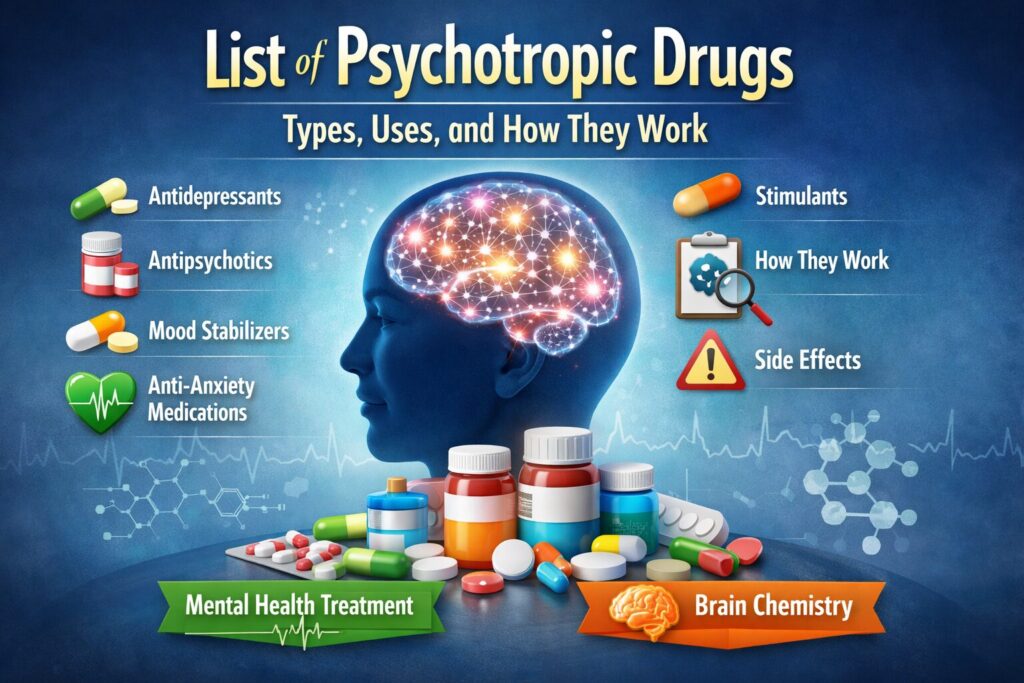
Psychotropic drugs are medications designed to affect the brain and nervous system in order to influence mood, behavior, perception, and thinking patterns. These medications are widely used in modern psychiatry to treat mental health conditions such as depression, anxiety disorders, bipolar disorder, schizophrenia, and attention deficit hyperactivity disorder (ADHD).
Mental health disorders affect millions of people worldwide, and psychotropic medications play a crucial role in helping individuals manage symptoms and improve their quality of life. These drugs work by altering the activity of neurotransmitters—chemical messengers in the brain that regulate mood, emotions, cognition, and behavior.
Key Takeaways
- Psychotropic drugs affect brain chemistry to regulate mood, thoughts, and behavior.
- They are commonly used to treat depression, anxiety, bipolar disorder, schizophrenia, ADHD, and sleep disorders.
- Major categories include antidepressants, antipsychotics, mood stabilizers, anxiolytics, hypnotics, and stimulants.
- These medications target neurotransmitters such as serotonin, dopamine, norepinephrine, and GABA.
- Proper medical supervision is essential to ensure safety, effectiveness, and minimal side effects.
- Understanding potential risks, interactions, and monitoring requirements helps ensure responsible medication use.
What Are Psychotropic Drugs?
Psychotropic drugs are medications specifically developed to alter brain function in ways that help manage psychological or psychiatric disorders. Unlike medications that treat physical illnesses like infections or pain, psychotropic drugs focus on the brain’s chemical processes.
The human brain communicates using neurotransmitters, which are chemical signals that transmit messages between nerve cells. When these neurotransmitters become imbalanced, mental health conditions may develop. Psychotropic medications work by adjusting the levels or activity of these chemicals to restore balance.
Common neurotransmitters targeted by psychotropic drugs include:
- Serotonin: influences mood, sleep, and appetite
- Dopamine: regulates motivation, pleasure, and movement
- Norepinephrine: affects alertness, energy, and focus
- GABA (Gamma-Aminobutyric Acid): promotes relaxation and reduces anxiety
Major Categories of Psychotropic Drugs
Psychotropic medications are grouped into several categories based on the conditions they treat and how they work in the brain.
1. Antidepressants
Antidepressants are among the most commonly prescribed psychotropic medications. They are primarily used to treat depression but are also effective for anxiety disorders, obsessive-compulsive disorder (OCD), panic disorder, and post-traumatic stress disorder (PTSD).
These medications work by increasing the availability of certain neurotransmitters that influence mood and emotional balance.
Common Types of Antidepressants
Selective Serotonin Reuptake Inhibitors (SSRIs)
SSRIs increase serotonin levels in the brain and are often the first-line treatment for depression and anxiety.
Examples include:
- Fluoxetine
- Sertraline
- Paroxetine
- Escitalopram
- Citalopram
Serotonin-Norepinephrine Reuptake Inhibitors (SNRIs)
SNRIs affect both serotonin and norepinephrine levels to improve mood and energy.
Examples include:
- Venlafaxine
- Duloxetine
- Desvenlafaxine
Tricyclic Antidepressants (TCAs)
An older class of antidepressants that can be effective but may have more side effects.
Examples include:
- Amitriptyline
- Nortriptyline
- Imipramine
- Clomipramine
Monoamine Oxidase Inhibitors (MAOIs)
These medications prevent the breakdown of neurotransmitters but require strict dietary restrictions.
Examples include:
- Phenelzine
- Tranylcypromine
- Isocarboxazid
Atypical Antidepressants
These medications have unique mechanisms and may be used when other treatments fail.
Examples include:
- Bupropio
- Mirtazapine
- Trazodone
2. Antipsychotic Medications
Antipsychotic drugs are used to treat severe mental health conditions such as schizophrenia, bipolar disorder, and psychotic depression. They help reduce symptoms like hallucinations, delusions, and disorganized thinking.
Antipsychotics mainly work by regulating dopamine activity in the brain.
Types of Antipsychotics
First-Generation (Typical) Antipsychotics
These were the earliest antipsychotic medications developed and are effective for treating psychosis.
Examples include:
- Haloperidol
- Chlorpromazine
- Fluphenazine
Second-Generation (Atypical) Antipsychotics
These newer medications generally have fewer movement-related side effects and also help with mood symptoms.
Examples include:
- Olanzapine
- Risperidone
- Quetiapine
- Clozapine
- Aripiprazole
- Ziprasidone
3. Mood Stabilizers
Mood stabilizers are primarily used to treat bipolar disorder, a condition characterized by extreme mood swings between manic and depressive episodes.
These medications help maintain emotional balance and prevent severe mood fluctuations.
Common Mood Stabilizers
- Lithium
- Valproic acid
- Carbamazepine
- Lamotrigine
4. Anxiolytics and Hypnotics
Anxiolytics are medications used to treat anxiety disorders, while hypnotics help manage insomnia and sleep disturbances.
These drugs often act on the GABA neurotransmitter system, which produces calming effects in the brain.
Benzodiazepines
Benzodiazepines are fast-acting medications that reduce anxiety and promote relaxation.
Examples include:
- Diazepam
- Lorazepam
- Alprazolam
- Clonazepam
Although effective, benzodiazepines can cause dependence if used long-term.
Non-Benzodiazepine Options
Other medications used for anxiety and sleep include:
- Buspirone
- Zolpidem
- Eszopiclone
These drugs typically have fewer dependency risks compared to benzodiazepines.
5. Stimulant Medications
Stimulants are commonly prescribed to treat attention deficit hyperactivity disorder (ADHD) and narcolepsy.
They work by increasing dopamine and norepinephrine levels, which improves attention, concentration, and alertness.
Common Stimulants
- Methylphenidate
- Amphetamine salts
- Dexmethylphenidate
- Modafinil
These medications help individuals focus better and maintain consistent attention during tasks.
6. Other Psychotropic Agents
In addition to the main categories, researchers continue to explore new psychoactive compounds for potential therapeutic benefits.
Some compounds are studied in research settings for their effects on cognition, mood regulation, or neurological disorders. However, many experimental drugs are not widely approved for medical use.
How Psychotropic Drugs Work in the Brain
Psychotropic drugs influence brain function by modifying how neurotransmitters interact with nerve cells.
For example:
- SSRIs increase serotonin levels to improve mood.
- Stimulants enhance dopamine activity to improve focus.
- Benzodiazepines increase GABA activity to calm the nervous system.
- Antipsychotics regulate dopamine pathways to control psychotic symptoms.
These mechanisms help restore chemical balance in the brain, reducing the intensity of mental health symptoms.
Potential Side Effects of Psychotropic Drugs
Like all medications, psychotropic drugs may cause side effects. The type and severity depend on the specific drug, dosage, and individual health factors.
Common side effects include:
- Drowsiness or fatigue
- Weight changes
- Dry mouth
- Nausea
- Dizziness
- Sleep disturbances
- Sexual side effects
Common Misconceptions About Psychotropic Drugs
There are many misunderstandings about psychiatric medications. Clarifying these misconceptions helps reduce stigma and encourages informed treatment decisions.
Myth: All psychotropic drugs are addictive
In reality, only certain medications such as benzodiazepines and some stimulants carry a significant risk of dependence.
Myth: These medications change your personality
Psychotropic drugs do not alter personality. Instead, they help stabilize mood and restore normal emotional functioning.
Myth: Natural remedies can replace psychiatric medications
While lifestyle changes and natural remedies can support mental health, severe psychiatric conditions often require medical treatment.
FAQs
What are psychotropic drugs used for?
Psychotropic medications are used to treat mental health conditions such as depression, anxiety disorders, bipolar disorder, schizophrenia, ADHD, and sleep disorders.
Which psychotropic drugs are most commonly prescribed?
Antidepressants particularly SSRIs like sertraline and fluoxetine—are among the most widely prescribed psychiatric medications.
Are psychotropic medications safe for long-term use?
Many psychotropic drugs can be safely used long-term under medical supervision. Regular monitoring helps ensure effectiveness and minimize risks.
Do psychotropic drugs cause addiction?
Most psychotropic medications are not addictive. However, some drugs—such as benzodiazepines or stimulants may carry a risk of dependence if misused.
Can lifestyle changes replace medication?
Healthy habits such as exercise, therapy, and stress management support mental health but may not replace medication for moderate or severe psychiatric disorders.
Conclusion
Psychotropic drugs play a critical role in modern mental health treatment, offering relief and stability for millions of people experiencing psychiatric conditions. By targeting neurotransmitters such as serotonin, dopamine, norepinephrine, and GABA, these medications help regulate mood, cognition, and behavior.
From antidepressants and antipsychotics to mood stabilizers, anxiolytics, and stimulants, each category serves a unique purpose in managing specific mental health disorders. While these medications can significantly improve quality of life, they should always be used under professional medical supervision.