
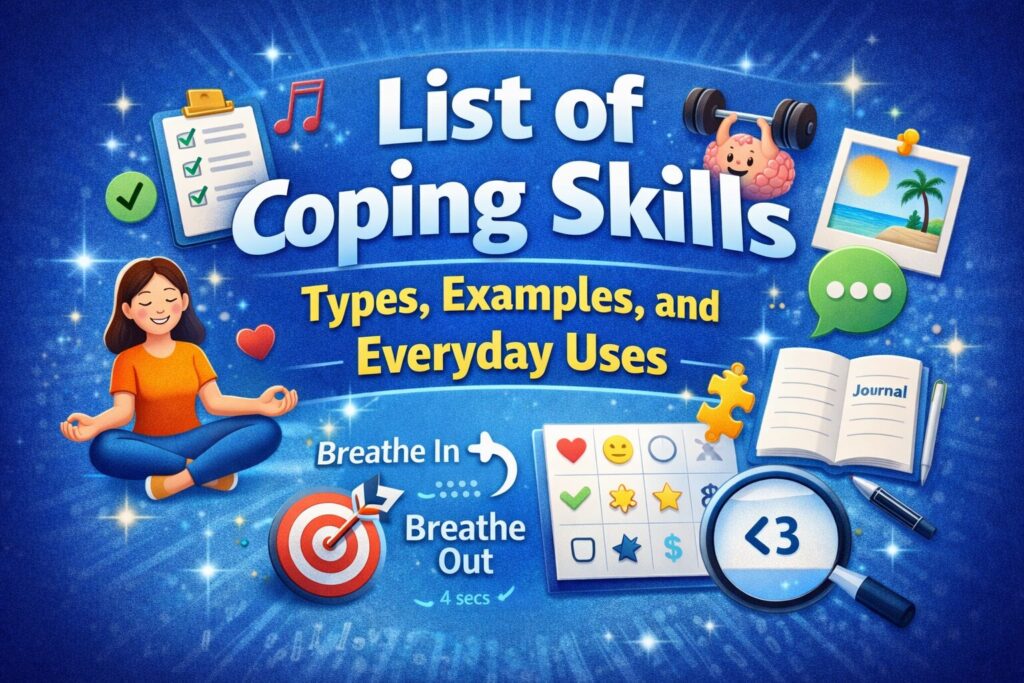
Stress and emotional challenges are common parts of everyday life. People respond to these challenges in different ways, often using learned behaviors or habits to manage difficult situations. These behaviors are commonly known as coping skills. Understanding what coping skills are and how they are generally used can help individuals recognize healthy patterns aand become more aware of their emotional responses.
This article provides general educational information about coping skills, including their main types, examples, and everyday uses. It is intended for informational purposes only and does not replace professional mental health support.
Key Takeaways
- Coping skills are commonly used strategies that help people respond to stress, emotions, and challenging situations.
- There are different types of coping skills, including problem-focused, emotion-focused, cognitive, behavioral, social, and reflective approaches.
- No single coping skill works for everyone; people often use multiple strategies depending on the situation.
- Healthy coping skills support long-term emotional balance, while unhelpful patterns may provide only temporary relief.
- Coping skills can change over time as personal needs, experiences, and circumstances evolve.
- Understanding coping skills improves self-awareness and helps people recognize how they typically respond to stress.
- This article provides general educational information and does not replace guidance from qualified mental health professionals.
What Are Coping Skills?
Coping skills are strategies people commonly use to respond to stress, emotional discomfort, or challenging situations. These skills influence how individuals think, feel, and behave when facing difficulties.
Some coping skills are used consciously, such as writing thoughts down or organizing tasks, while others develop naturally over time. Certain strategies may offer short-term relief, while others contribute to long-term emotional stability. The effectiveness of any coping skill varies depending on the situation and the individual.
Why Coping Skills Matter
Daily life includes responsibilities, uncertainty, and unexpected changes. Without constructive ways to respond, stress can feel overwhelming. Coping skills help people process emotions, manage reactions, and maintain balance during challenging moments.
Having multiple coping strategies allows flexibility. Since no single approach works in every situation, understanding different types of coping skills helps individuals choose responses that are appropriate and supportive in various circumstances.
Main Types of Coping Skills
Coping skills are often grouped into categories based on how they are used. These categories are not rigid, and many strategies overlap.
Problem-Focused Coping Skills
Problem-focused coping involves addressing the source of stress directly when possible. These strategies focus on taking practical steps to manage or reduce a challenge.
Common examples include:
- Organizing tasks or creating schedules
- Breaking large problems into smaller steps
- Seeking information or clarification
- Planning ahead to reduce uncertainty
This type of coping is commonly used when a situation can be changed or improved through action.
Emotion-Focused Coping Skills
Emotion-focused coping centers on managing emotional responses rather than changing the situation itself. These strategies are often used when circumstances cannot be immediately altered.
Examples include:
- Writing thoughts and feelings in a journal
- Practicing breathing or relaxation techniques
- Engaging in calming activities
- Talking about emotions with a trusted person
These approaches help reduce emotional intensity and support emotional awareness.
Avoidance-Based Coping
Avoidance coping involves temporarily distancing oneself from stressors. This may include distraction or postponing engagement with a difficult situation.
Examples include:
- Taking a short break
- Redirecting attention to a neutral activity
- Pausing before responding emotionally
When used briefly and intentionally, avoidance may provide time to regain clarity. However, long-term reliance on avoidance may create additional challenges.
Healthy vs. Unhealthy Coping Skills
Coping strategies are often described as healthy or unhealthy based on their long-term impact.
Healthy coping skills tend to support emotional balance, daily functioning, and personal well-being over time.
Unhealthy coping patterns may reduce discomfort temporarily but can interfere with responsibilities, relationships, or overall stability if relied upon consistently.
Awareness of these differences helps individuals reflect on their habits and responses.
Emotional Coping Skills
Emotional coping strategies focus on recognizing and processing feelings in constructive ways.
Mindfulness Practices
Mindfulness involves paying attention to thoughts and emotions without judgment. This practice encourages awareness of the present moment and can reduce emotional reactivity.
Journaling
Writing about experiences and emotions can help clarify thoughts and identify patterns. Journaling is commonly used as a reflective tool.
Creative Activities
Creative expression such as drawing, music, or movement provides a nonverbal outlet for emotions and supports relaxation.
Behavioral Coping Skills
Behavioral strategies involve actions that support balance and routine.
Physical Movement
Regular physical activity is associated with reduced tension and improved mood. This may include walking, stretching, or structured exercise.
Establishing Routines
Consistent daily routines can provide structure and predictability, which many people find stabilizing during stressful periods.
Engaging in Interests
Hobbies and personal interests offer moments of enjoyment and mental rest, helping balance daily pressures.
Cognitive Coping Skills
Cognitive coping relates to how individuals interpret and think about situations.
Thought Reframing
Reframing involves viewing situations from alternative perspectives, such as focusing on lessons learned rather than setbacks.
Gratitude Practices
Focusing on positive aspects of life, even small ones, can influence outlook and emotional balance.
Visualization
Visualization techniques involve imagining calming or positive scenarios to reduce stress responses.
Social Coping Skills
Social coping involves interacting with others for support and connection.
Talking with Others
Sharing experiences with trusted individuals can provide reassurance and perspective.
Seeking Professional Support
Mental health professionals offer structured guidance and evidence-based strategies for managing emotional challenges.
Building Supportive Relationships
Strong social connections contribute to emotional resilience and a sense of belonging.
Spiritual and Reflective Coping
For some individuals, spiritual or reflective practices provide comfort and meaning.
Examples include:
- Meditation or quiet reflection
- Prayer or spiritual reading
- Spending time in nature
These practices may encourage calmness and personal reflection.
Creating a Personal Coping Skills List
Because responses to stress vary, many people benefit from identifying coping strategies that work best for them. This often involves:
- Trying different approaches
- Noticing which strategies feel supportive
- Adjusting methods based on situations
Over time, this personal list can serve as a helpful reference during challenging moments.
FAQs
What are coping skills?
Coping skills are commonly used strategies for managing stress, emotions, and challenges in daily life.
Are coping skills the same for everyone?
No. Effectiveness varies depending on individual preferences, experiences, and situations.
Can coping skills change over time?
Yes. People often adapt their coping strategies as circumstances and needs change.
Do coping skills replace professional help?
Coping skills are not a replacement for professional support. They are commonly used alongside guidance from qualified professionals.
Conclusion
Coping skills play an important role in how people respond to stress and emotional challenges. Understanding different types of coping strategies provides insight into common human responses and encourages greater self-awareness. By recognizing and exploring various approaches, individuals can better understand their reactions and support emotional balance in everyday life.
This article has provided a general overview of coping skills for informational and educational purposes, helping readers become more familiar with commonly discussed strategies and their everyday applications.