
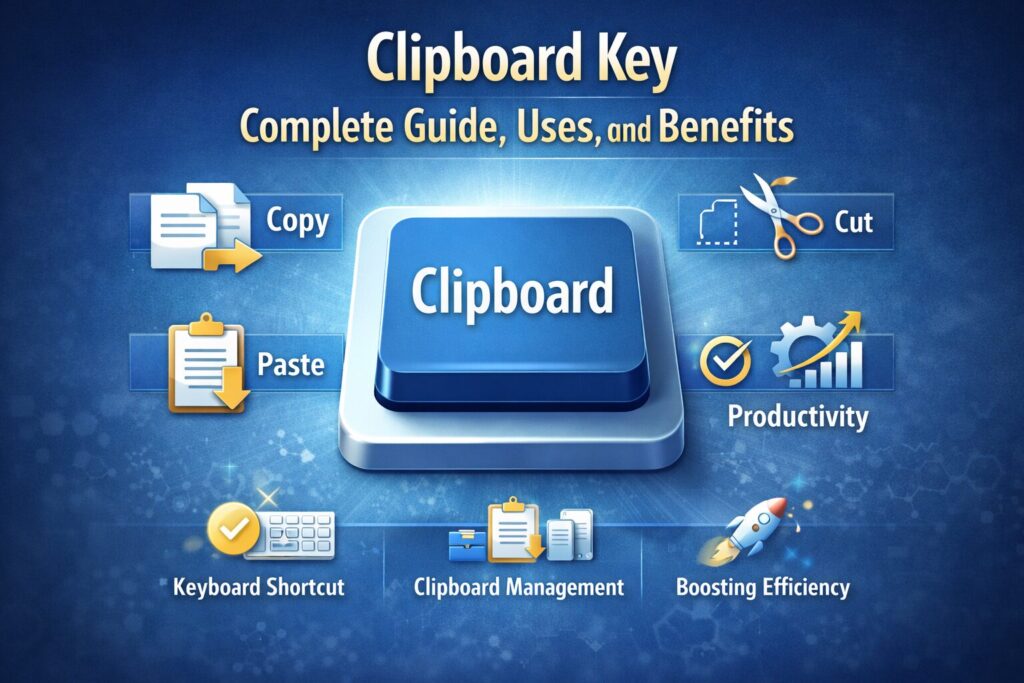
The clipboard key is a small but powerful feature in modern computing that bridges what we copy and how we paste it. It is essential for productivity, enabling users to move text, images, files, and other content across applications seamlessly. Whether you are a student, developer, office professional, or content creator, mastering the clipboard key can drastically reduce repetitive tasks and enhance efficiency.
Key Takeaways
- The clipboard key simplifies access to copied data, saving time and reducing repetitive work.
- Clipboard history and cross-device synchronization enhance workflow efficiency.
- Windows and mobile devices have integrated clipboard shortcuts for instant access.
- Security and privacy precautions are important when using clipboard functions.
- Future AI-powered clipboards promise predictive pasting and context-aware functionality.
What Is the Clipboard in Computing
The clipboard is a temporary storage space in an operating system that holds copied or cut data until it is pasted elsewhere. It works silently in the background and is fundamental to digital workflows across Windows, macOS, Android, and iOS. From copying a paragraph for a report to transferring a code snippet, the clipboard ensures information moves quickly and accurately without repeated typing.
Evolution of Clipboard Shortcuts
Initially, clipboards could store only one item at a time. Modern systems now include:
- Clipboard history: Store multiple items simultaneously.
- Cross-device sync: Access copied content on different devices.
- Pinned items: Keep frequently used entries readily available.
These advancements turn the clipboard from a simple memory buffer into a productivity powerhouse.
Understanding the Clipboard Key
The clipboard key provides direct access to clipboard functions without relying solely on standard shortcuts.
- Windows: Use Windows + V to view clipboard history.
- Mobile devices: Virtual keyboards like Gboard and SwiftKey include on-screen clipboard buttons.
Practical examples:
- Business analysts can reference multiple statistics without switching tabs.
- Social media managers can reuse captions, hashtags, and links instantly.
This direct access saves time and minimizes repetitive clicks.
Benefits of Using Clipboard Functions
- Time-saving: Quickly access previously copied data.
- Improved focus: Reduce task-switching and interruptions.
- Efficiency in multitasking: Ideal for researchers, writers, designers, and developers.
- Cross-device workflow: Synchronize data across computers, tablets, and phones.
The psychological benefit of seamless workflow is increased concentration and productivity.
Clipboard in Windows Systems
- Clipboard history: Access multiple past copies and pin important items.
- Device synchronization: Copy on one device, paste on another.
- Integration: Works across Office, browsers, and productivity apps.
Clipboard on Mobile Devices
- Virtual keyboards provide easy access to copied items.
- Cloud sync enables cross-device pasting.
- Essential for mobile-heavy tasks like messaging, emailing, and social media management.
Security and Privacy Considerations
- Clipboards can store sensitive information, so manage carefully.
- Clear history regularly and disable on shared devices.
- Use trusted third-party clipboard managers only to avoid data leaks.
Future of Clipboard Technology
Clipboard systems are evolving:
- AI-powered suggestions: Predictive pasting and context-aware recommendations.
- Voice commands: Retrieve clipboard items using virtual assistants.
- Intelligent organization: Automatic categorization and formatting.
The clipboard will become increasingly adaptive, enhancing productivity across all digital platforms.
Related Concepts
Clipboard History vs Clipboard Key
- Clipboard history: Stores a list of copied items.
- Clipboard key: Shortcut or function that opens the history.
- Together, they maximize workflow efficiency.
Third-Party Clipboard Managers
- Allow categorization, labeling, and search of thousands of copied items.
- Useful for developers, researchers, and content creators.
- Enhance built-in features without replacing the clipboard’s core function.
Common Misconceptions
- The clipboard is not unlimited; it is often restricted by system settings.
- Copied content does not stay forever; it is usually cleared after a reboot for security reasons.
- Advanced features are available but require enabling in settings or using additional software.
FAQs
How can I enable clipboard history in Windows?
Go to system settings Clipboard Turn on Clipboard history. Press Windows + V to access past items.
Can I access my clipboard across devices?
Yes, with cloud sync. Copy on one device, paste on another seamlessly.
Is the clipboard secure?
It temporarily stores data. Clear history regularly and avoid copying sensitive info on shared devices.
What are common clipboard issues?
Problems usually occur when history is disabled or corrupted. Restarting or resetting settings often resolves them.
Can I customize my clipboard?
Yes, third-party managers allow saving more items, auto-formatting, and workflow automation.
Conclusion
The clipboard key is more than a minor feature; it is a cornerstone of digital productivity. By providing instant access to copied content, it saves time, reduces errors, and streamlines tasks across devices. With features like clipboard history, synchronization, and future AI-driven enhancements, mastering the clipboard key is a simple yet impactful way to boost efficiency for professionals, students, and everyday users alike.